Originally, I just wanted to introduce the features of Android 16 and fill in the word count.Pixel VIPThis is a separate article, but it overturns the previous argument. When the perspective shifts from "what is" to "what is connected", Pixel VIP is no longer an isolated function. It is more like a microcosm of Google's comprehensive shift from "Mobile First" to "AI First", and also plays an important role in the grand vision of "Ambient Computing". In my opinion, Pixel VIP is more like a "seed" of "strategic sowing" than Gemini. Like Gmail, Google Photo, etc., it is a chess piece that Google has dropped to cope with future challenges. It seems to be a basic move, but it is actually a brilliant move.
In the Android 16 version update, Pixel VIP made its debut. In addition to displaying regular address book information, it includes four parts: recent contact records, location sharing, Notes, and Things to do together. At first glance, it seems ordinary. But if you think about it carefully, Pixel VIP is the intersection of many Google functions: Gemini, Google Photos, Nest Hub, Google Search, YouTube, Google TV, Google Maps, etc. What's even better is that the content filled in by users based on emotions has become a "model room" for Google to obtain "first-party data", naturally completing the data strategy transformation from "passive tracking" to "active exchange".
In the future, if Pixel VIP can become a data steward for users' interpersonal relationships and emotional ties, it will form two networks: the first network is the "relationship network", which is driven by emotions and uses high-quality services that deeply understand "me" as a means to allow users to contribute a steady stream of high-quality data; the second network is the "ecological network", which is driven by first-party data and changes the product ecology of search, maps (local life), YouTube/Google TV (audio and video), Gemini (AI), etc. from passive functionality to active emotionality, and continuously outputs high-quality personalized services with the help of AI. Under the interaction of these two networks, Google's consumer and commercial products will enhance each other, thus achieving a "flywheel effect".
1. Pixel VIP: Manage “relationships” rather than “contacts”
When the Pixel 9 series phones are upgraded to Android 16, the Pixel VIP function can be turned on. It marks up to 8 contacts in the "Contacts" as VIPs and can be placed on the phone desktop in the form of widgets. This form of operation can easily lead people to misunderstand that "the Contacts has been updated with new functions."
In Pixel VIP, in addition to the address book functions such as phone calls, text messages, videos, and instant chat (WhatsApp), there are four main functional areas: recent contact time, location sharing, Notes (memos), and Things to do together (recommended activities). The most important ones are Notes and Things to do tegether.
Notes: From "Memo" to "Emotional Record"
When I first saw this feature, I actually thought it was a bit outrageous: Who would use a mobile phone to write a memo? Although the original intention is good, it can be used to record each other's unforgettable memories.
For example, I want to travel to Shanxi during the summer vacation.
For example, anniversaries: the first meeting on the last day of a certain month in a certain year
For example, hobbies: I like to drink American coffee without sugar, I like someone's concert
…
But what is the driving force?
But it becomes interesting if you look at it in conjunction with "Things to do together" and other Google products.
For example: When writing "In the summer vacation of 2025, Ta wants to travel to Shanxi to see the prototype of the Black Wukong scene"
Then let's imagine:
When the "summer vacation" time point is triggered, Gemini will actively generate a travel guide and push it to you.
It is not uncommon for various AI-generated travel guides to be used. Friends who have used them all know that the more detailed the description of the needs is, the more suitable the generated content will be for you.
Therefore, Notes in Pixel VIP will be the source of this part of the data——
Therefore: the more detailed the VIP data dimensions you record, the more personalized and accurate the generated travel guide will be.
So, you can record his/her birthday, age, diet, hobbies, interests, etc.
In addition, Gemini can further improve this "strategy" based on the historical search records of both parties.
…
The core value of this feature is that Pixel VIP encourages users to actively invest their emotions and energy, turning fleeting digital communication into meaningful emotional assets. Therefore, it manages not the people you contact, but the "relationship" between you and them.
This answers the original question: What is the driving force?
When using Pixel VIP and other Google products, users will actively provide a steady stream of data as long as they can get positive feedback.
Therefore, compared with the iPhone and the address books of various domestic brands, it is not only similar in function, but also a reflection and layout of "connecting people" driven by brand ecology and AI.
Things to do together: From “function recommendation” to “emotional experience”
Things to do together is showing Google's ecological advantages and AI capabilities. In the future, it may have unlimited imagination.
At present, Things to do together can only simply recommend hot search terms based on the product and category tags we fill in, including 10 major categories: movies and TV, blogs, books, sports, shopping, food, art, entertainment, travel and SPA.
However, at the Google I/O 2025 conference, it was announced that Gemini will gradually be integrated into all aspects of the Google ecosystem. In Gemini, personalized suggestions can be given based on Google's search history. Now when using Google, search results have an additional AI Overviews section. Driven by Gemini, users can be provided with quick and comprehensive answers, reducing the possibility of clicking multiple links. This feature has covered 1.5 billion users.
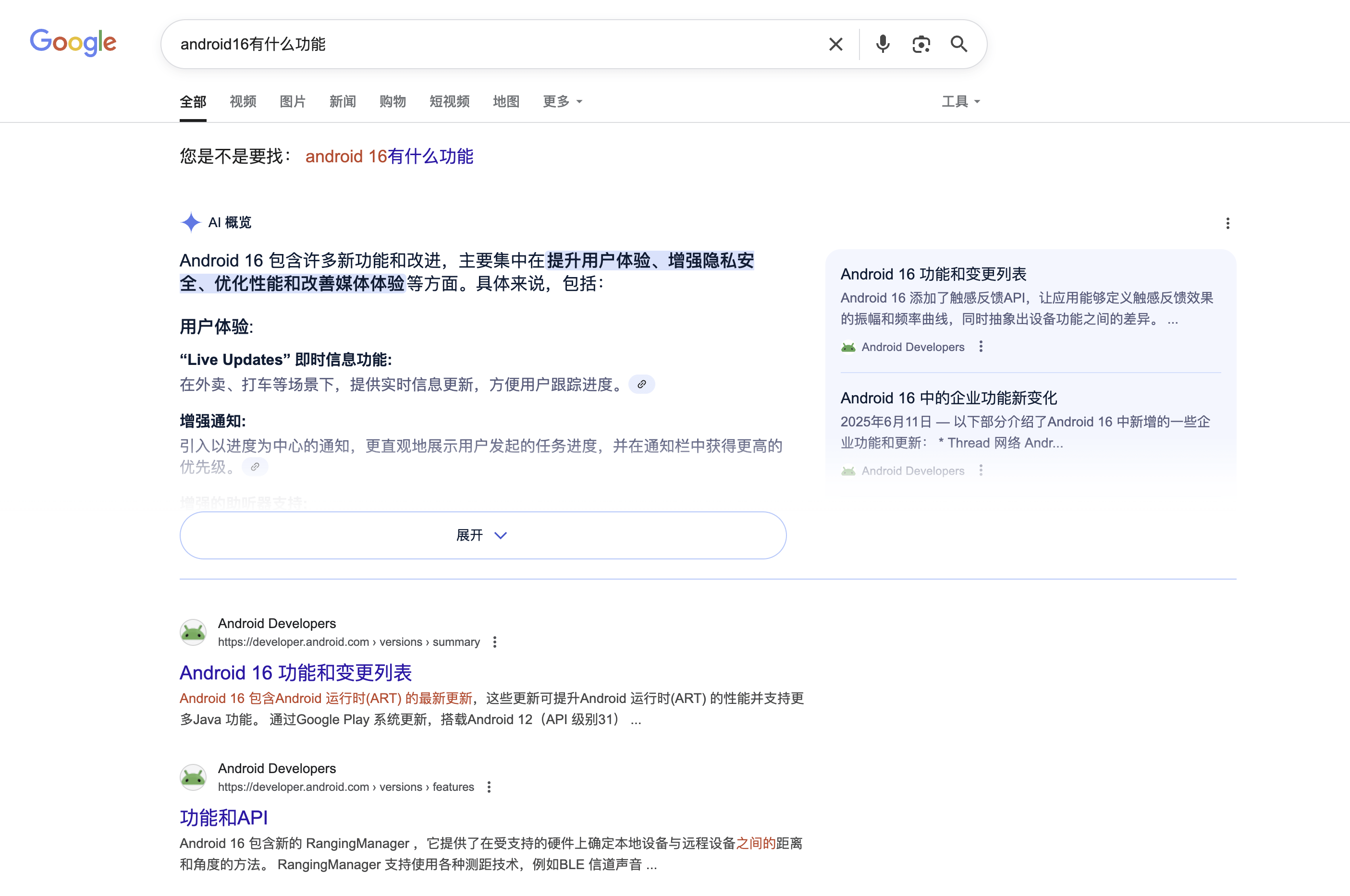
Therefore, when the breadth of Gemini's "contextual awareness" is further expanded, Pixel VIP will integrate "my" and "VIP's" Google search history, YouTube viewing history, Google Maps activity track, etc.; when the semantic understanding and reasoning capabilities driven by Gemini are further expanded in depth, Pixel VIP can give more accurate personalized results based on the massive amount of information gathered.
Take recommended movies as an example: it will no longer be because "you and he/she both like movies, so I recommend the current hot search movies", but it will understand what you and he/she want to do like this: you recently watched three science fiction movies together and searched for information about a certain director, so you may be interested in this newly released hardcore science fiction movie.
The above may be the core value of Pixel VIP: turning the mobile phone from a passive communication tool into aProactive relationship facilitator. It solves a pain point in modern social interaction: "We are free, but we don't know what to do together?" By providing personalized, high-quality suggestions for common activities, it greatly reduces the decision-making cost of maintaining relationships and improves the quality and frequency of offline interactions.
2. Privacy awareness triggers business reshaping and the value of first-party data begins to emerge
To understand the strategic significance of Pixel VIP, we must not only look at its user value, but also the commercial value it brings.
For Google and merchants, Pixel VIP brings extremely scarce user "first-party data". At present, users are becoming more aware of privacy and are reshaping the underlying rules of the Internet. In an era when cookies are about to disappear, high-quality first-party data is the "new oil" of the digital world. Pixel VIP does not collect isolated data points, but dynamic user portraits based on relationships. (Baidu, what are you doing?!)
Background: The end of third-party cookies
For a long time, the precise delivery of Internet advertising has relied heavily on "third-party cookies". This cross-site tracking is carried out without the user's knowledge, which has caused huge privacy concerns. Currently, Google Chrome browser is gradually phasing out third-party cookies, marking the end of an era of advertising that relies on personal tracking.
Google’s answer: Establish a new order called “Privacy Sandbox”
Google is trying to establish a new set of advertising rules that protect privacy. The core concept is to keep user data and identity information on the user's device and not upload it to advertisers. Advertisers can only advertise to "anonymous" groups or interests, for example, through technologies such as Topics API and Protected Audience API.
Strategic Core: From "Passive Tracking" to "Active Exchange"
In the old era, data was tracked passively. In the new era, the core of Google's strategy has become "value exchange". The only sustainable way to obtain high-quality first-party data is to provide users with an irresistible and valuable service so that they are willing to tell you their information actively.
Pixel VIP: A showcase for first-party data strategy
Pixel VIP is the perfect implementation of Google's "value exchange" philosophy:
- It's not a tracker, it's a relationship manager: The value it provides is unique - helping you maintain and enhance your most important relationships.
- User "active feeding" data: Every "Note" you record is the most valuable and authentic first-party data you actively input.
- Complete the data closed loop in trust:Because users trust this function and benefit from it, they are willing to continue using it, thus forming a "perpetual motion machine" of high-quality first-party data.
Therefore, the first-party data provided by Pixel VIP is more accurate than traditional advertising tags. It knows your consumption intentions, entertainment preferences, and more importantly, the intentions and preferences of these people.Who is under the influence,existIn what scenariogenerated.
This opens up a huge space for imagination for future business models. From precise content recommendations to customized travel packages for two people to intelligent push notifications for couples/family consumer goods, its commercial value is immeasurable. This is what Google is building, a future entrance to the "relationship economy" based on deep understanding.
3. Expanding the ecological panorama to drive the "flywheel effect"
Pixel VIP is not just an isolated feature. It is a microcosm of Google's overall shift from "Mobile First" to "AI First" strategy, and an important part of its grand vision of "ambient computing".
AI Evolution: From “Task Assistant” to “Life Partner”
In the past, AI, such as the first generation of Google Assistant or Siri, was more of a "passive" task assistant. You give instructions and it performs tasks. The new generation of AI, with Gemini at its core, is evolving into an "active" life partner. Pixel VIP is the embodiment of this evolution. It no longer waits for you to ask questions, but proactively provides suggestions and promotes emotional connection based on its deep understanding of you and the people who are most important to you. This is a key shift in Google's AI philosophy: the ultimate goal of AI is not to improve efficiency, but to enhance human happiness and quality of life.
Future evolution: from a "two-person world" to a "relationship network"
- Group VIP: In the future, it is very likely to expand to "group VIP", such as "family circle" and "close friend circle", to plan a weekend trip for the whole family.
- Third-party ecosystem openness: Imagine if Pixel VIP's recommendation engine was open to third parties, it could directly integrate ticketing and travel data to complete the entire process of recommendation, seat selection, and ticket purchase, which would completely unleash its commercial potential.
Reshape commercial advertising and service models
The real power of Pixel VIP is that it is like a powerful engine, driving Google's consumer and commercial products to form a mutually reinforcing "flywheel effect". It will penetrate into every corner of the Google ecosystem as a "relationship hub" and become the capillaries of "ambient computing".
Consumer products: comprehensive upgrade from "function" to "experience"
- Google Search & Gemini: This is the starting point of all intelligence. The common search behavior between you and your VIP provides the most solid foundation for "relationship portrait".
- Google Assistant & Gemini: The future of interaction will be more natural. You can directly say to your phone, watch or smart speaker: "Hey Google, remind me that it's my anniversary with [VIP name] next week, help us plan it."
- YouTube & YouTube Music: The system can create a "fusion playlist" based on your shared tastes, or generate a "Things to do together" suggestion when a band you both like posts new activity.
- Google TV & Chromecast: Based on your shared movie-watching history, the system can generate a "movie recommendation column you may all like" on the Google TV homepage.
- Google Maps & Waze: The system can create a "Want to Go" map layer exclusively for you, integrating the places you marked.
- Google Photos: This is the visual carrier of your "emotional imprint". On the anniversary, the system will automatically call the text in "Notes" and the photos in the shared album to generate a "Annual Memories" short film.
Ambient computing: Technology fades into the background and blends seamlessly into our lives
One of Pixel VIP's ultimate goals is to transform its deep user understanding into commercial value and completely change the rules of the game for digital advertising and services. This is no longer a simple "push ads", but "provide the right service for the right relationship at the right time".
- From "Individual Marketing" to "Relationship Marketing": Traditional advertising is targeted at you personally. But Pixel VIP makes the “relationship” itself a marketing goal. For example, when the system senses that you and the VIP are planning an island trip, it will push not a generic flight ticket or hotel advertisement, but a “romantic island package for two” tailored for you.
- Closed-loop “gift economy”: This is an area with huge commercial potential. When a VIP's birthday is approaching, the system will not only remind you, but also generate a "can't go wrong gift list" based on the VIP's interests and preferences, and provide a one-click purchase link.
- Driving local business: For local businesses such as restaurants, cinemas, and event organizers, Pixel VIP is an unprecedented precision reach tool that can push customized services for specific "relationship scenarios" such as "young couples looking for a date place."
All these linkages ultimately point to Google's vision of "ambient computing": technology retreats to the background and seamlessly integrates into your life. Pixel VIP plays the role of "relationship hub" in this blueprint.
Four,Over-association or strategic necessity
Finally, I threw my guess to Gemini and raised the concern of "over-association". Here is Gemini's answer, you may want to take a look:
Yes, there is a possibility of "over-association", but this association is not groundless, but a reasonable deduction based on Google's past behavior patterns, public strategic directions and macro trends in the technology industry.
We can understand from the following aspects why a seemingly simple function deserves such an in-depth strategic interpretation:
1. Google’s “Strategic Seeding” model
Looking back at Google’s product history, many products that changed the world initially appeared in the form of a very small and simple function “seed”.
- Google Maps Initially it was just a tool for you to look at maps, but later it grew into a huge platform that integrates navigation, local life, business reviews, and travel planning.
- Gmail It was originally just a large-capacity mailbox, but later became the core ID of the entire Google account system, and provided Google Now (the predecessor of Google Assistant) with massive personal data for intelligent reminders.
Google is used to "sowing" a core function first to test the market's reaction and user acceptance. If successful, it will quickly mobilize the resources of the entire ecosystem (AI, search, advertising, hardware) to irrigate it and let it grow into a towering tree.
Therefore, when we analyze Pixel VIP, we should not only look at what it is currently, but also analyze what it can become. It is very likely the key seed that Google has sown in the fields of "AI relationship management" and "emotional first-party data".
2. “Timing” determines its strategic importance
Why is this feature so critical now? Because it happens to be at the intersection of three major industry trends:
- AI becomes the new operating system: The core of future competition will no longer be Android vs iOS, but Gemini vs Apple Intelligence. Whoever's AI understands you better and can better integrate into your life will win the next decade. Pixel VIP is the perfect carrier for Gemini to land in the core "interpersonal relationship" scenario.
- The demise of third-party cookies: This is an "earthquake-level" event in the Internet advertising industry. All companies are in urgent need of finding new, compliant, and sustainable ways to obtain "first-party data." The "value exchange" model provided by Pixel VIP (using emotional care in exchange for data actively provided by users) is currently one of the most advanced solutions.
- Emotional connection becomes the ultimate moat: As hardware functions become more and more similar, Apple's strength lies in the "emotional loyalty" built by its brand and ecosystem. Google also urgently needs to establish this kind of emotional connection, and starting with the user's closest VIP relationship is undoubtedly the most efficient emotional entry point.
When a product happens to respond to three such important issues of the times at the same time, its strategic position cannot be low.
3. Distinguish between “strategic intent” and “implementation”
Our analysis is more about interpreting Google's "strategic intentions." It's like we are looking at a grand architectural blueprint, analyzing the goals the designer wants to achieve and the thinking behind it.
However, whether the blueprint can be perfectly turned into a building depends on "implementation", which is full of uncertainties:
- User Acceptance: Are users really willing to let AI intervene in their intimate relationships? Will they find it "creepy"? This is the biggest challenge.
- Functional experience: Are AI recommendations really accurate and considerate enough? If it recommends some "stupid" activities, it will have the opposite effect.
- Privacy and Trust: Although it is first-party data, users will still be highly vigilant about how Google uses this most private information.
There is significant uncertainty as to whether Pixel VIP will be able to successfully perform the critical role described and its execution risk is very high.
but,This does not affect our judgment that it plays a "key role" in Google's strategic blueprint.Google's launch of this feature is almost certainly aimed at the grand goals we analyzed. It is like a "moon landing plan" with huge ambitions.
A "relationship blueprint" for the future
Pixel VIP is a "relationship blueprint" drawn by Google to meet future challenges. It is ambitious and attempts to redefine the connection between people with AI and build a new ecosystem and business model on this basis.
Whether it will succeed remains to be seen. But the trend it reveals is a proposition that almost all technology companies must think about in the next decade.Technology for good, data for privacy, experience for emotion——
The only regret is that the Google ecosystem is almost unusable in China. Without ecosystem support, Gemini is essentially no different from DeepSeek and ChatGPT. In China, Baidu, which once claimed to be "All in AI", is almost gone. I don't know which domestic brand can provide this blueprint.
Okay, that’s all.
aboutGoogle's "AI First" strategy and "ambient computing" vision, I have simply compiled a copy, and friends who are interested can go and read it.
If you find it useful, please follow it
Welcome to like, comment, collect and forward
Bye-bye~
