In Windows 11, file extensions are hidden by default to prevent accidental damage to files. However, if you need to view file extensions, you can follow these steps:

Step 1: Open File Explorer
First, let’s open File Explorer in Windows 11, your go-to tool for managing files and folders.
- You can find the folder icon in the taskbar at the bottom of your screen, typically a yellow folder icon. Simply click on it to open File Explorer.

Step 2: Access Folder Options
Once you have File Explorer open, head to Folder Options to change your file extension display settings.
- In the top menu bar of File Explorer, locate the “View” option. This reveals a set of new options.
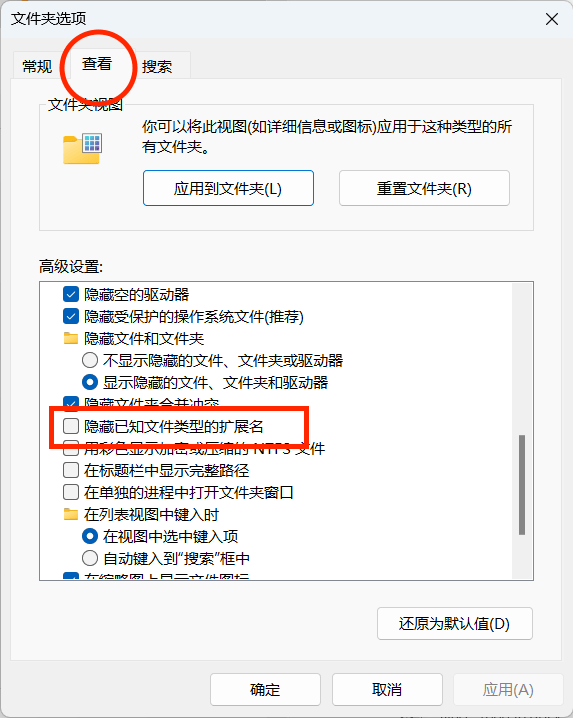
Step 3: Unveil File Extensions
Now, we need to find “Folder and search options” to reveal those file extensions.
- Within the new window that pops up, navigate to the “View” tab. In this tab, you’ll notice a list containing an option labeled “Hide extensions for known file types,” which is checked by default. This option hides file extensions. To display them, simply uncheck this option.
Step 4: Confirm the Changes
Once you’ve unchecked the “Hide extensions for known file types” option, click on the “Apply” button, and then proceed to click “OK” to save your changes.
As a result, Windows 11 will now display file extensions, making it easier for you to identify file types and manage your files more effectively. These detailed steps should help you successfully show file extensions in Windows 11, enhancing your file management efficiency.
An alternative method to modify hidden file extensions:
- Utilize the taskbar search bar to look up “Registry Editor” and open this application.
- Within the Registry Editor, you’ll need to navigate to the following location: HKEY_CURRENT_USER\SOFTWARE\Microsoft\Windows\CurrentVersion\Explorer\Advanced
- On the right-hand pane, locate the “HideFileExtensions” key.
- Double-click on the “HideFileExtensions” key, and adjust the “Value data” to “0”.
- Confirm your changes by clicking “OK.”
Please note that altering file extensions might affect the functionality of specific programs. If you’re not familiar with file extensions, it’s advisable to make changes with caution.
